


Zone · Wire connectors · Lever nuts vs wire nuts
Lever nuts vs wire nuts
Updated
Before wiring, turn off power at the breaker; follow local code; use a licensed electrician if unsure.
Side by side
| Twist-on wire nut | Lever connector | Push-in connector | Crimp butt connector | |
|---|---|---|---|---|
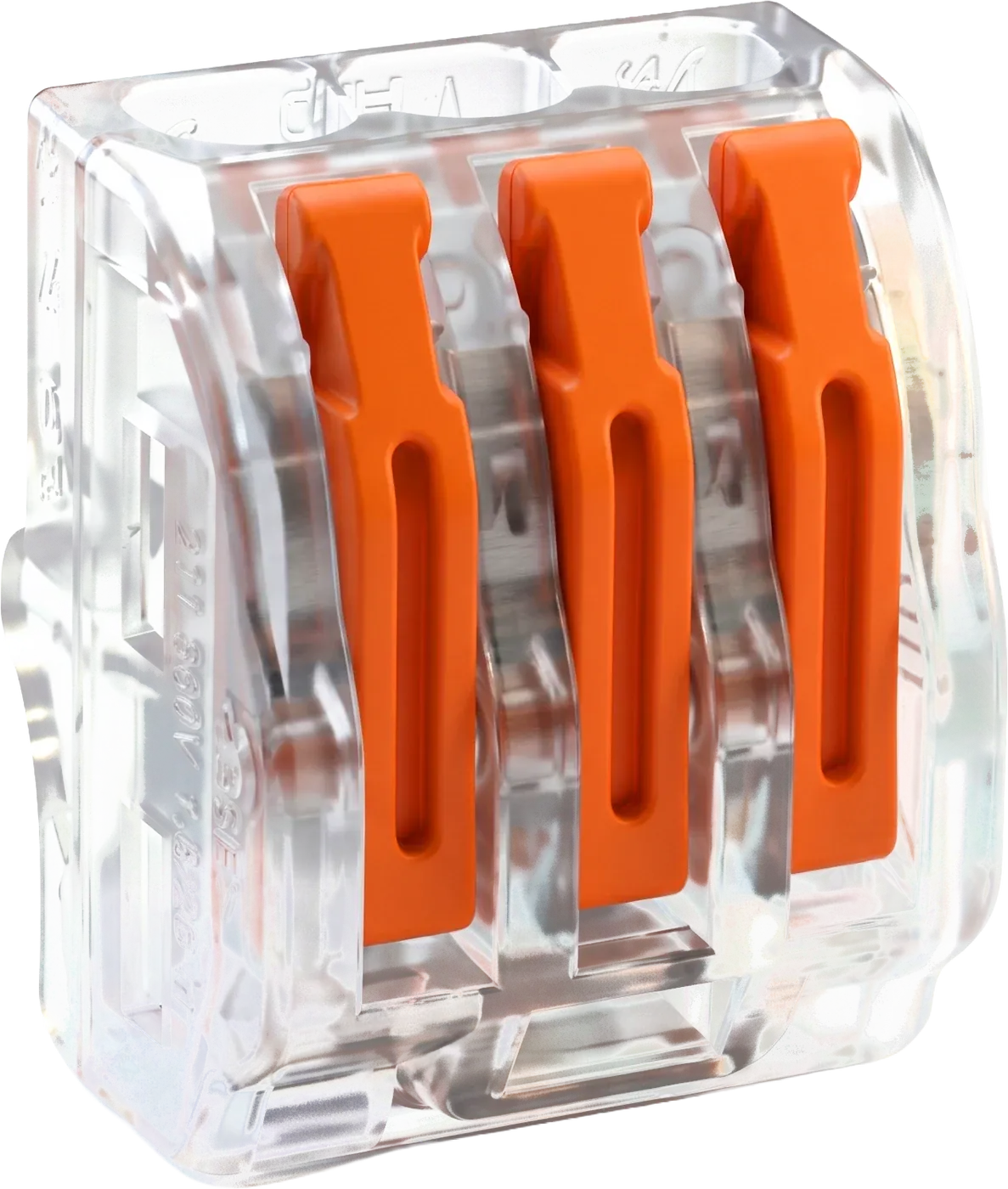
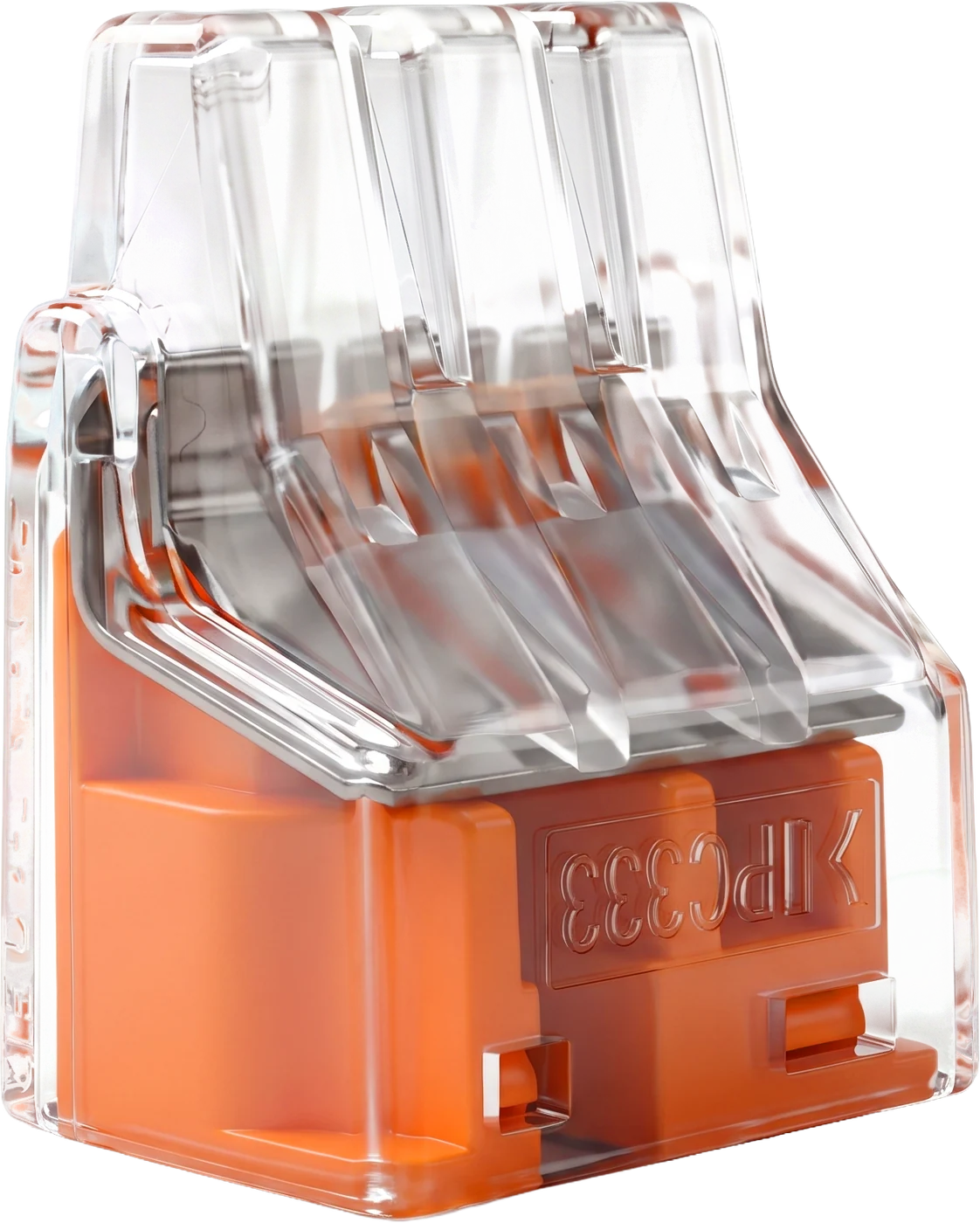
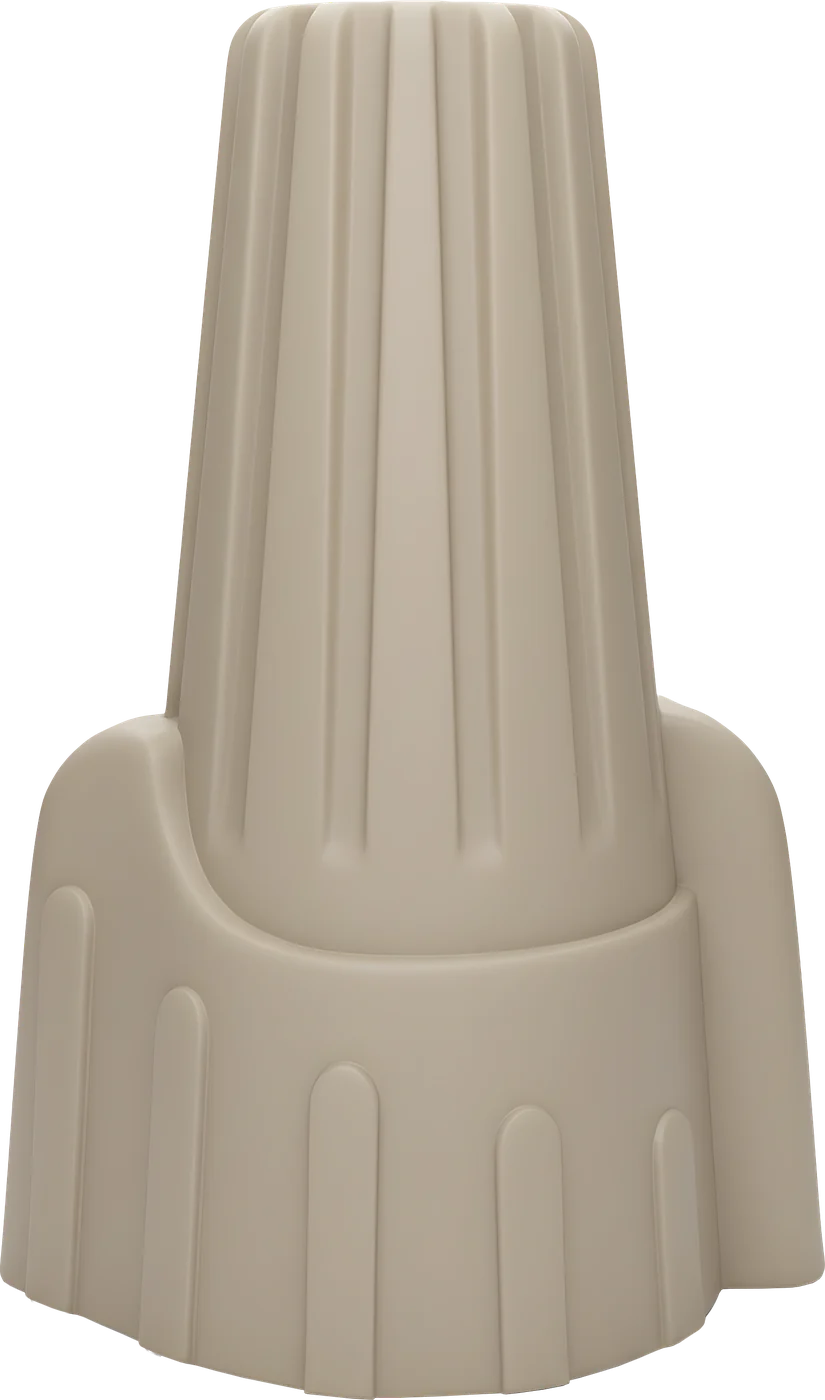
| How it holds the wire | Twisted by hand over the stripped ends of the wires; the spring insert inside the cap grips them. | Each wire goes into its own port and a lever on that port clamps it. | Each stripped wire is pushed straight into its own port. | A barrel crimped onto each wire end with a crimping tool; heat-shrink types are then sealed with heat. |
| Tool needed | None | None | None | Crimping tool (and heat for heat-shrink) |
| Opening the splice again | Can be unscrewed to change the splice | Reusable, as published (PC623) | Not published on the Zone listing | Cut out and replaced to change the splice |
| Zone SKUs | P12C, P13, P6, P11V, P3, P2, P99 | PC623 | PC333 | BCT2H-100, BCT2H-200, BCT1H-100, BCT1V-100 |
| Zone wire range | 22–8 AWG · 22–10 AWG · 18–10 AWG · 22–14 AWG · 14–10 AWG | 28–12 AWG | 22–12 AWG | 16–14 AWG · 22–16 AWG |
| UL standard | UL 486C · UL 467 | UL 486C | UL 486C | UL 486C |
“Not published on the Zone listing” means the listing does not say either way; it is not a “no”.
Are lever nuts better than wire nuts?
Neither is better for every job. Zone’s lever connector and its twist-on caps are listed to the same standard, UL 486C (splicing wire connectors); the one exception is the green grounding cap, listed to UL 467. So the choice is about the job:
- You may need to change the splice later: a lever connector opens again; Zone’s PC623 is published as reusable.
- Each wire should sit in its own port: lever and push-in connectors give every wire its own port, three per Zone connector.
- The widest range of wire sizes: compare the published ranges above; Zone’s twist-on caps go up to 8 AWG.
- An inline splice: joining two wires end to end, as when extending a wire, is what a butt connector is for. Heat-shrink helps keep moisture out, but on its own it isn’t a wet or burial rating.
- Wet, damp or buried: use a connector rated for that location. Zone’s direct-bury caps are listed separately: waterproof direct-bury wire nuts.
Whichever you pick, your wires need to be inside that connector’s range and the connector needs a listing for the job. Follow the instructions on the pack.
Lever nuts vs push-in connectors
Both are tool-free three-port connectors. A lever connector clamps each wire with its own lever; a push-in connector holds the wire as it is pushed in. Zone’s lever connector (PC623) is published for 28–12 AWG; the push-in connector (PC333) is published for 22–12 AWG. Both are listed to UL 486C.
How the connection methods differ
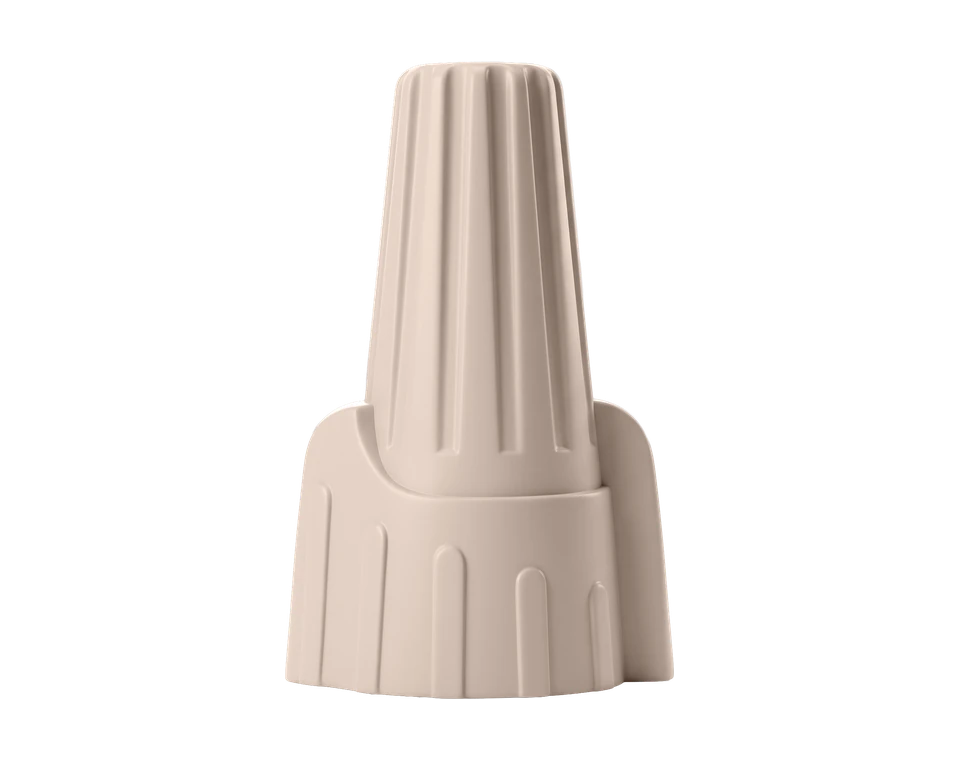
A twist-on wire nut has a cone-shaped metal spring inside a plastic cap. You hold the stripped wires together and twist the cap on, and the spring pulls the wires into a tight bundle. It’s quick, cheap and handles a wide spread of wire sizes, but it takes a little practice to get the twist right. Tug each wire afterwards to check it’s held.
A lever connector has a small lever over each port. Lift the lever, push in the stripped wire, snap the lever down and the wire is clamped. Each wire sits on its own, so you can add or remove one without disturbing the others. A push-in connector skips the lever: you push the stripped wire straight in and a spring contact holds it. Both are easy in a cramped box, and the clear or coloured housing lets you see how far the wire went in.
A crimp connector works differently. You squeeze a metal barrel onto the wire with a crimping tool, which makes a permanent joint. It’s the usual choice for inline splices and for ring or fork terminals that go under a screw. The right crimp needs the right tool for the connector size. Heat-shrink versions add tubing that you shrink with a heat gun to seal the joint, which helps against moisture but isn’t a burial rating on its own.
Compare the information available for the job
Start with what you’re joining and where. Then check the wire range, whether the connector takes solid, stranded or both, how many wires it takes and whether it’s rated for the location. A three-port housing and a wide AWG range tell you different things. Three ports means three wires at most; the range tells you which sizes.
If you expect to change the splice later, look for a connector sold as reusable. Zone publishes the PC623 lever connector as reusable. A lever that opens easily doesn’t automatically mean the connector is meant to be reused over and over, so go by what the maker says.