

Zone · Guides · Slim and canless recessed lights
What are slim canless recessed lights?
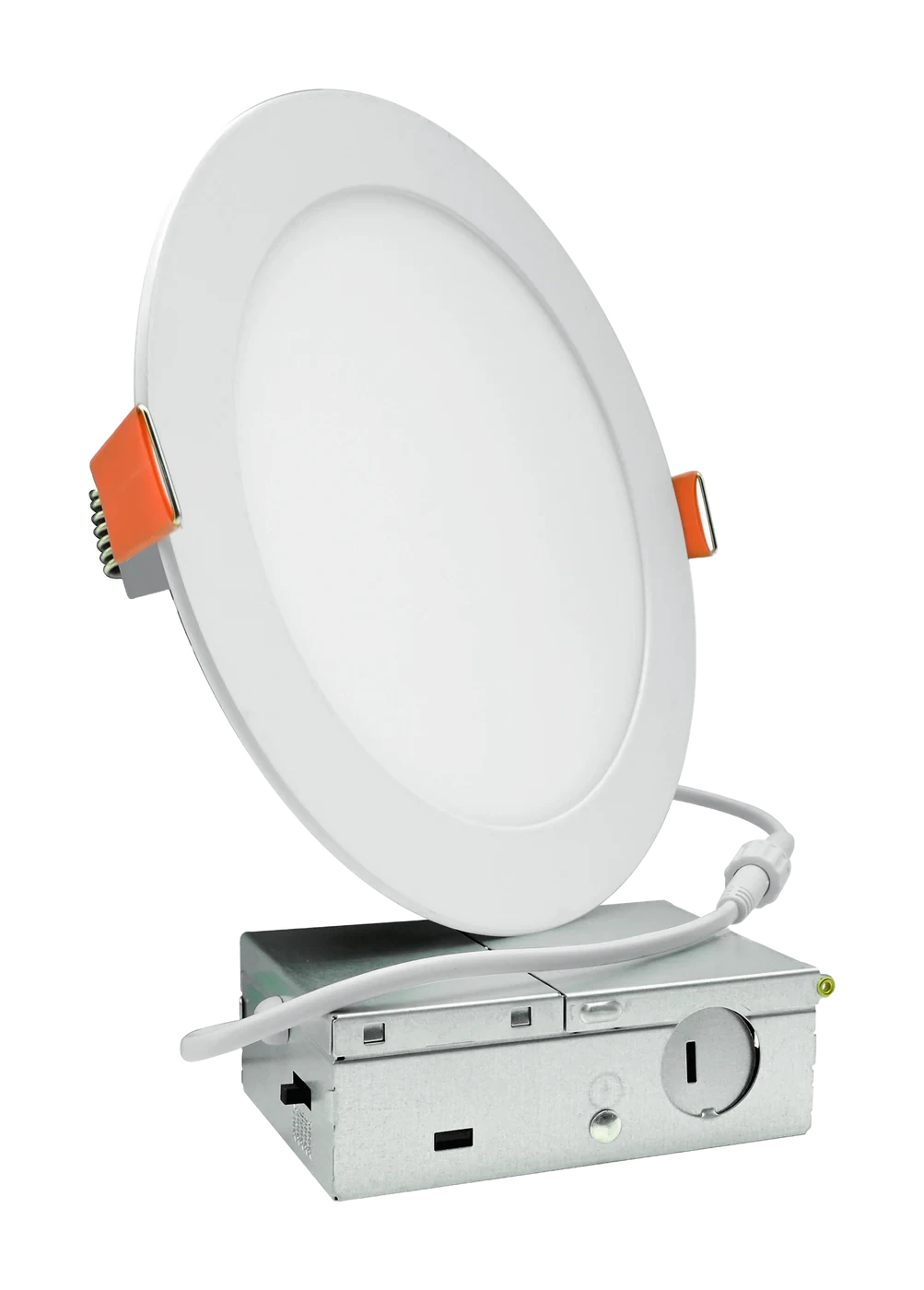
A canless recessed light mounts straight into the ceiling without a separate can housing above it. The slim body helps where ceiling space is tight, but the light and its junction box still need the room the instructions call for.
Before wiring, turn off power at the breaker; follow local code; use a licensed electrician if unsure. Follow the instructions for the exact light or connector.
Slim doesn’t mean it fits every ceiling
Before you buy, check how much space you have above the ceiling, what the ceiling is made of, how the light mounts and what size hole it needs. The outside of the trim is bigger than the hole it covers, so don’t cut using the trim diameter or a product photo. Use the cutout size or template from the instructions.
Zone slim recessed models
| Zone light | Published dimensions | Power | Supply | Dimming | Location and insulation rating |
|---|---|---|---|---|---|
| Slim recessed light, 2-pack, whiteZ-RCUC5W-2P | 6.69 x 0.91 in | 13 W | 120 V AC, 60 Hz | Yes, TRIAC dimmers (10-100%) | Wet locations; IC rated |
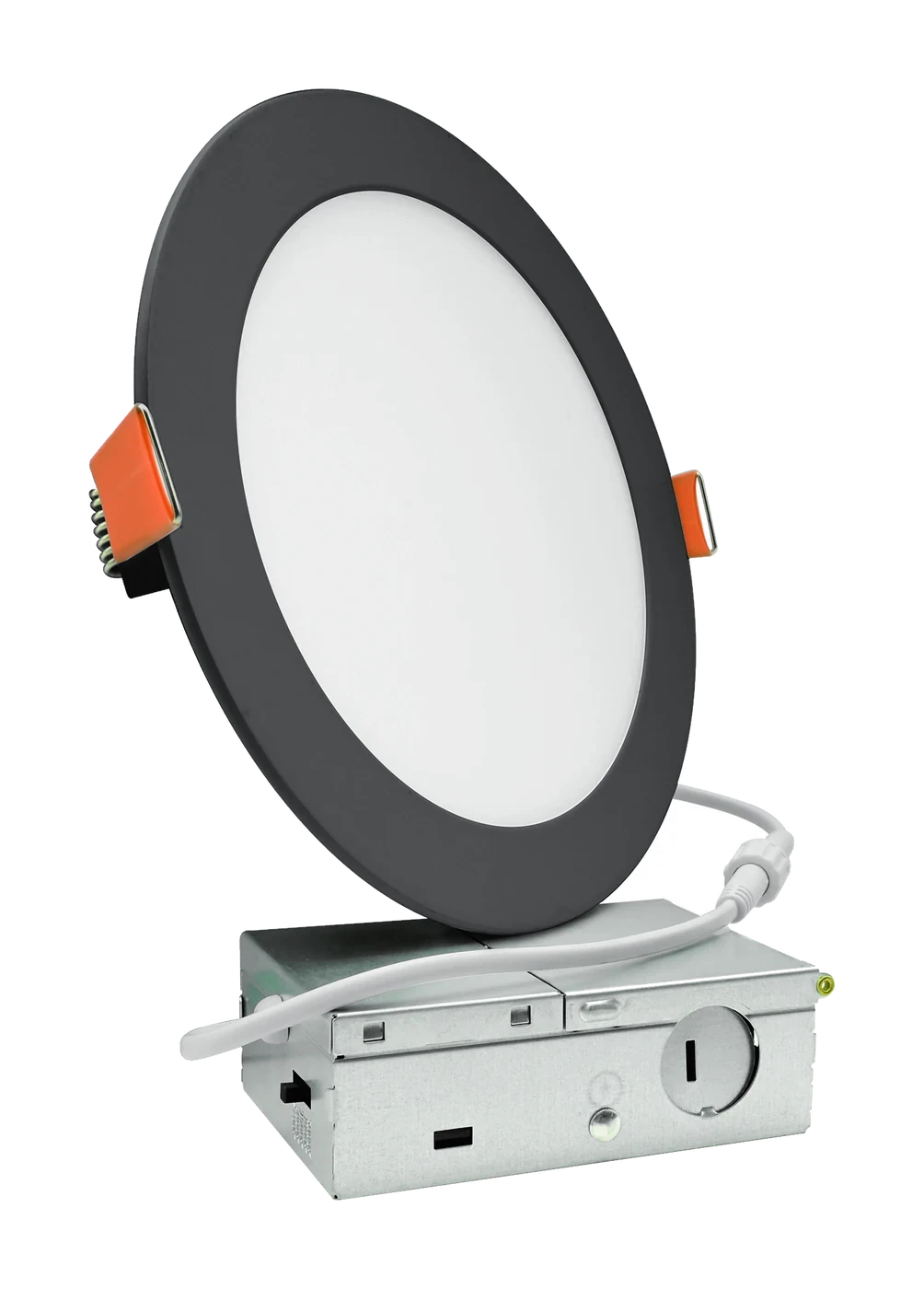
| Slim recessed light, 2-pack, blackZ-RCUC5B-2P | 6.69 x 0.91 in | 13 W | 120 V AC, 60 Hz | Yes, TRIAC dimmers (10-100%) | Wet locations; IC rated |
These are the specifications and features published for each exact model on its linked product page. “Not published” is an information gap, not a rating or a “no”.
The white and black versions are each sold as a two-pack, with a slim profile and their own junction box. They share the specs in the table. Zone hasn’t published lumen output or a confirmed colour temperature for them yet, so we don’t list a brightness or Kelvin figure here.
What do IC rated and wet location mean?
IC rated means the light can sit in direct contact with ceiling insulation, so you don’t have to clear insulation away from it. Wet location means it can handle water exposure, such as a shower area or an outdoor soffit, as the instructions allow. Both Zone models carry both ratings. You still need to follow the instructions for clearances, junction-box placement and mounting.
Will it work with a dimmer?
Yes, with a TRIAC dimmer. These models dim over the range shown in the table. TRIAC is the most common kind of wall dimmer, but not every TRIAC dimmer works smoothly with every LED. Check the dimmer’s own LED compatibility before you buy, and don’t assume “dimmable” covers other types of control.
Before ordering or cutting
- Get the cutout template and clearance figures for the model.
- Check you have a power feed, access above the ceiling and room for the junction box.
- Make sure the location and insulation around it match the ratings.
- If brightness and colour need to match the rest of the room, confirm them first.
How a canless light differs from a can light or retrofit trim
A traditional recessed light has a metal can housing fixed above the ceiling, and the light fits inside it. A retrofit trim is an LED insert made to go into one of those existing cans. A canless light skips the can: the slim light usually clips into a hole in the ceiling and wires to its own junction box. From below, all three can look much the same, but they install very differently.
The thin face isn’t the only part that needs room above the ceiling. The junction box and wire connections take space too. That’s why overall size, hole size and clearance are three separate numbers. The trim covers the edge of the hole, but its outside diameter isn’t the hole size.
Plan the light before the ceiling pattern
A neat grid of small round lights can look tidy and still light the room badly. Think about what happens under them: walking down a hall, working at a counter and lighting a wall of art are different jobs. You need the light output and beam spread to turn a pattern into a proper lighting plan.
If you’re replacing old lights, measure the existing holes and compare them with the new model’s cutout; not every round recessed light swaps in. If a key size or output figure is missing, get it before you commit to a layout. A low profile only helps if the whole light fits the ceiling and lights the room the way you want.
Common questions
Is canless the same as recessed?
Canless is one kind of recessed light. Others use a separate can housing, or a retrofit insert that goes into an existing can. From below they can look alike, so read how the product mounts.
Can a slim light fit under a joist or duct?
Often, since that’s what slim lights are for, but measure first. The junction box and wires still need space, and the light may not sit right over an obstruction. Use the model’s installation dimensions and clearances rather than the word “slim”.
Are the trim diameter and cutout diameter the same?
No. The trim is the visible ring and is wider than the hole so it can cover the edge. Cut using the hole size or template in the instructions, not the overall size in the table.
Does a two-pack light a whole room?
It depends on the room. Two lights might be plenty for a small hallway or bathroom and too few for a kitchen. Coverage depends on light output, beam spread, ceiling height and how bright you want it, not on how many come in the box.
Does IC rated also mean airtight?
No, they’re different ratings. IC rated means it can touch insulation. Airtight (often marked “AT”) means it limits air leaking between the room and the attic. If your building code or energy plan needs both, check for each one separately.
Can recessed lights replace under-cabinet lighting?
Not really. Ceiling lights give good general light, but upper cabinets and your own head cast shadows on the counter. Under-cabinet lights sit below the cabinets and light the worktop directly. Most kitchens look and work best with both.