

Zone · Guides · Lumens vs watts
Lumens vs watts: what is the difference?
Lumens tell you how much light you get. Watts tell you how much electricity it uses. With LEDs, shop by lumens for brightness, then use watts to compare running cost.
Does a higher wattage mean a brighter LED?
No. With old incandescent bulbs, more watts meant more light, so people learned to shop by watts. LEDs broke that link. Two LED lights can give the same lumens while one uses fewer watts. Where the light goes matters too: an open bulb and a shaded one can put very different amounts of light on a workbench even when their lumens match. Compare both numbers for the exact product, then think about where its light lands.
ENERGY STAR’s brightness guide explains the same thing. A “60 W equivalent” label compares the LED with an old bulb type. It isn’t what the LED actually draws; that’s the real wattage printed elsewhere on the box.
Zone examples
| Zone light | Light output | Power |
|---|---|---|
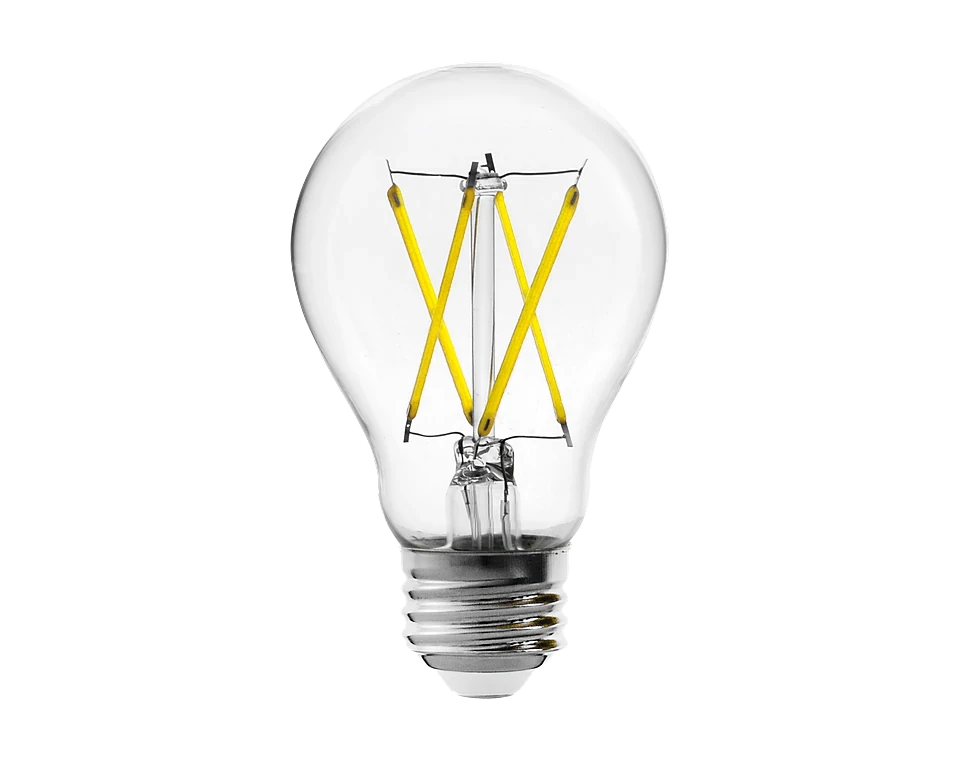
| 5,000 lumen garage bulbZ-TB50 | 5,000 lm | 36 W |
| Garage bulb with shadeZ-XL-GL50 | 5,000 lm | 60 W |
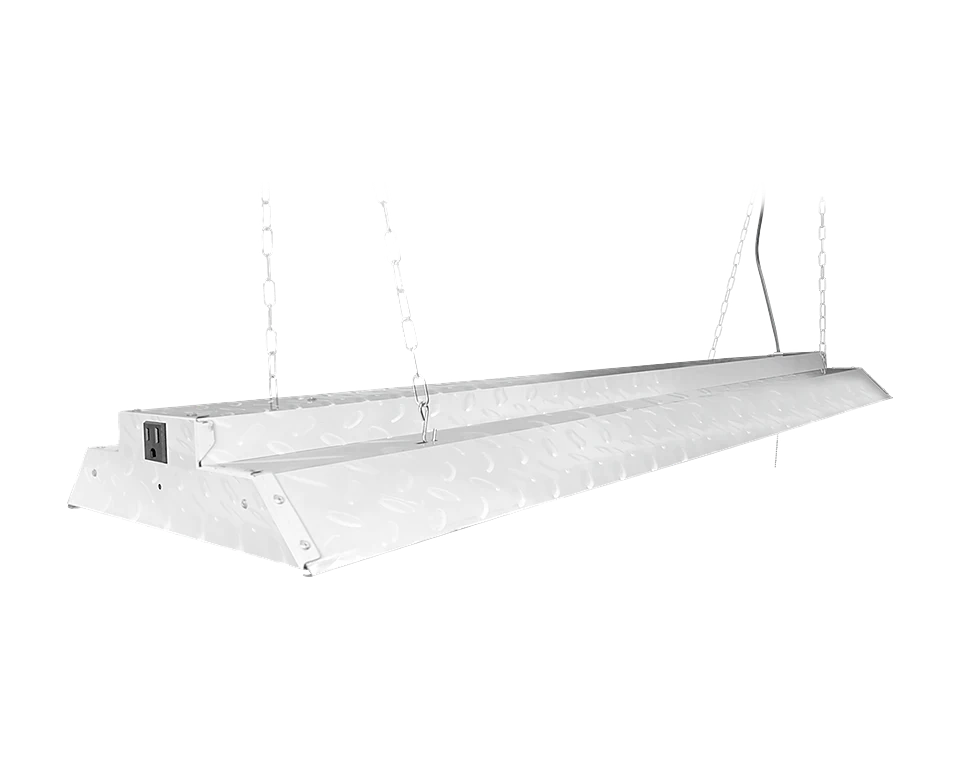
| Motion-activated 3-panel garage lightZ-JG-80AL-M | 8,000 lm | 80 W |
| 18 in. 3-CCT linkable under-cabinet lightZ-UCL-LD-B0418 | 800 lm | 10 W |
These are the specifications and features published for each exact model on its linked product page. “Not published” is an information gap, not a rating or a “no”.
The two garage bulbs above both give 5,000 lumens but use different wattages. That’s the whole point in one row: watts alone don’t tell you how bright a light is. It doesn’t mean either bulb suits every fixture or every room, so still check the base and size.
What about lumens per watt?
Divide lumens by watts and you get efficiency: how much light you get for each watt of power. Higher is better for your electric bill. Only compare figures for the same kind of product, though. A number for a bare LED chip isn’t comparable with one for a finished light with its driver, and there’s no single formula that turns watts into lumens.
Before choosing the light
- Check the total lumens on the box, not just the biggest number in the product name.
- Check the base or mounting, and whether it’s rated for the location (damp garage, outdoors).
- Think about shadows, which way the light points and colour temperature as well as output.
- For a garage, use the garage-light guide to plan; a lumen total alone doesn’t tell you how many lights or where to put them.
From light output to light on a surface
Lumens are the total light coming out of a light. The light that actually lands on a surface is measured in lux or footcandles. That’s why a light with a big lumen number can still leave a shelf or bench in shadow: some light goes to the walls and ceiling, and things like cabinets, cars or your own body get in the way.
Compare lights for the same job. For overhead lighting, compare complete fixtures and how they spread light. For a lamp, think about the shade and which way the bulb faces. The Department of Energy’s LED overview makes the same point about the difference between an LED chip and a finished fixture: a lab figure for the chip isn’t what the finished light puts out.
Which number answers which question
| Measurement | Question it answers | What it doesn’t tell you |
|---|---|---|
| Lumens | Total visible light output | Even coverage of a room |
| Watts | Electrical power use | Brightness on their own |
| Lux or footcandles | Light reaching a surface | Total output without a layout |
| Kelvin | Warm or cool white appearance | Output or colour fidelity |
Common questions
How many lumens equal one watt?
There’s no fixed number. It depends on the LED, the electronics and the whole design. If a product lists both lumens and watts, dividing one by the other tells you how efficient that light is. You can’t use it to guess the lumens of a different model.
What does “60 W equivalent” mean?
It means the LED gives about as much light as an old 60-watt incandescent bulb, which is roughly 800 lumens. The LED itself uses far less power. For running cost, read the actual wattage. For brightness, read the lumens.
How many lumens replace my old bulb?
A rough guide for standard household bulbs: about 450 lumens replaces a 40 W bulb, 800 lumens a 60 W, 1,100 lumens a 75 W and 1,600 lumens a 100 W. For a whole garage or shop, work from the size of the space instead; the garage-light guide shows the maths.
Are more lumens always better?
Not always. More lumens means more light overall, but it only helps if it lands where you need it. Too much light pointed the wrong way causes glare and can still leave your work in shadow. Work out which surfaces need light before you buy the biggest number.
Can I add up the lumens from several lights?
Yes, adding them gives you the total light from all of them. It won’t tell you how bright any one spot will be. Where you mount them, how far away the surface is, how the beams overlap and what’s in the way all change how much light reaches the bench, shelf or floor.
Does a dimmed light still use the full wattage?
No. Dimming an LED lowers both its light and its power use. The wattage on the box is at full brightness. Exactly how much you save at a given dimmer setting depends on the light and the dimmer, so don’t read a dimmer percentage as an exact energy saving.
Are lumens useful for choosing a grow light?
Only partly. Lumens measure light as the human eye sees it. Plants use light differently, so grow lights are judged by spectrum and by how much usable light (PPFD) reaches the leaves. Use the grow-light figures, not room-light lumens, to plan for plants.