
Zone · Guides · Tripod, stand or clamp work light
Tripod, stand or clamp work light?
Updated
At a glance
| Type | Best for | Zone work lights |
|---|---|---|
| Tripod | Lighting a whole room or job site from above head height | Z-20000-DT-2, Z-7000T, Z-2000DT-6, Z-XY40RDT2 |
| Clamp | Light right over the work, off the floor: shelves, rails, ladders | Z-1200-C |
Tripod work lights
A telescoping tripod lifts the light above head height and stands on its own in the middle of a room or a job site. Good for lighting a whole space where there is no ceiling light yet.
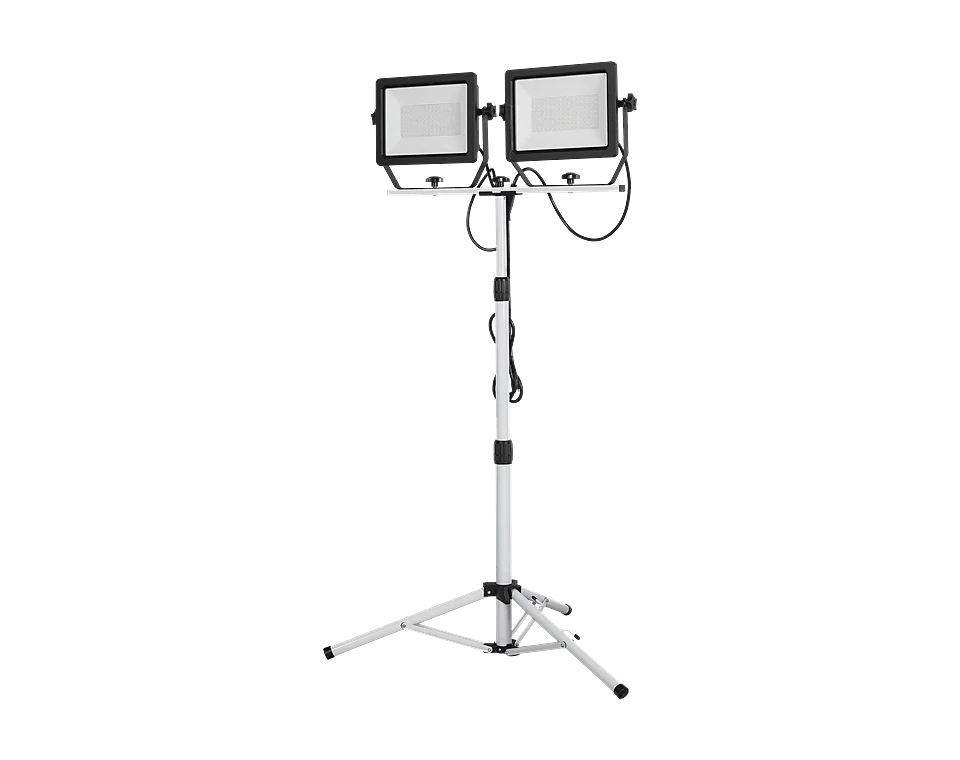
- Dual-head tripod work light (Z-20000-DT-2): Twin heads tilt and swivel. Tripod adjusts to 55 in. 20,000 lm, 200 W, ETL listed.
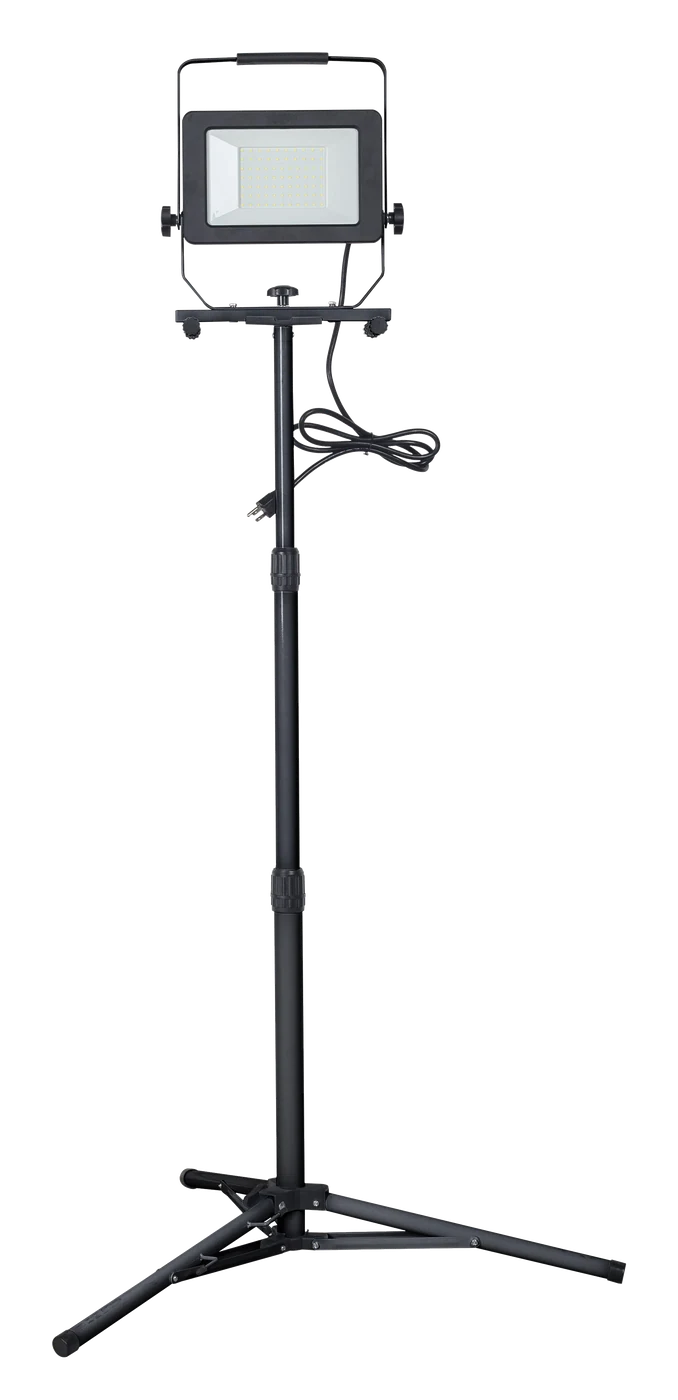
- Detachable tripod work light (Z-7000T): Detachable work light. Tripod adjusts to 55 in. 5000K daylight. LED life: 50,000 hours. 7,000 lm, 70 W, ETL listed.
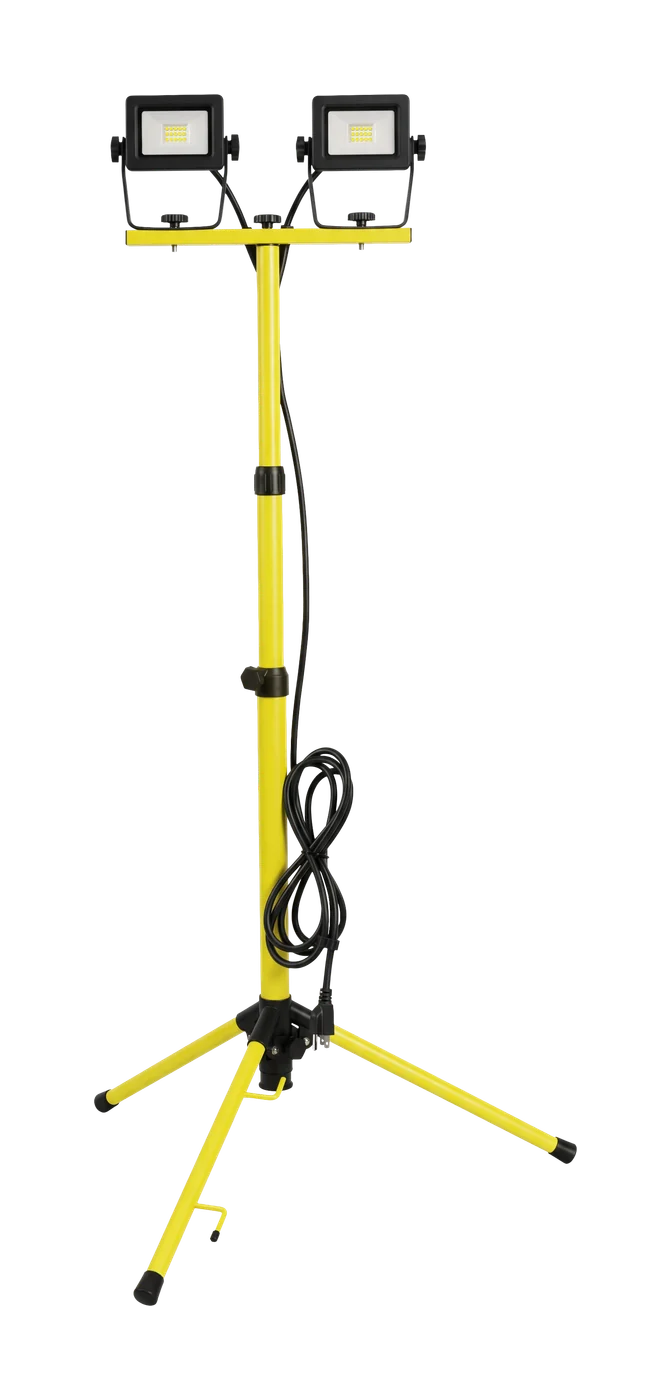
- 2,400 lumen LED tripod work light (Z-2000DT-6): Two light heads. Tripod adjusts to 48 in. 6 ft 4 in grounded cord. LED life: 50,000 hours. 2,400 lm, 20 W.
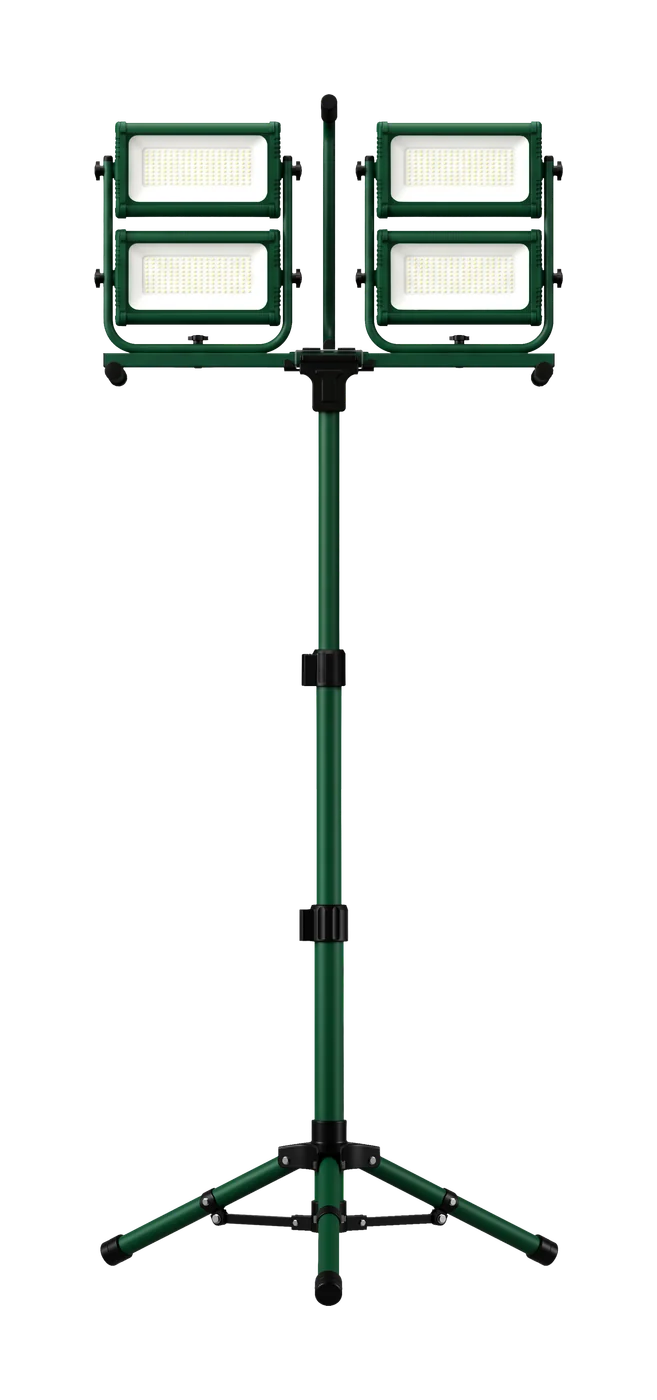
- 40,000 lumen LED tripod work light (Z-XY40RDT2): LED tripod work light. 40,000 lm.
Clamp work lights
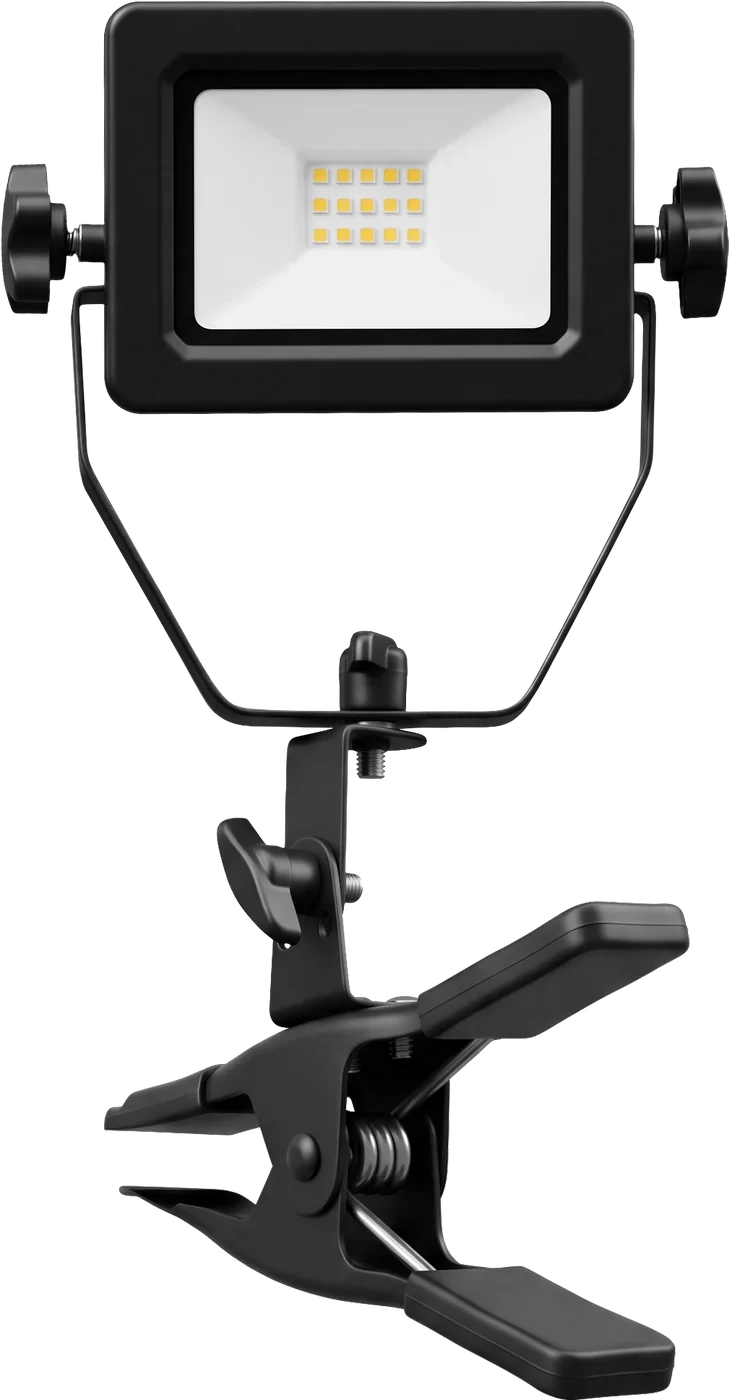
A spring clamp grips a shelf, rail, ladder or bench edge, so the light sits right over the work without taking floor space.
- Clamp work light (Z-1200-C): Spring clamp grips rails and shelves. Head tilts on the yoke. Suitable for wet locations, indoors or out. 5000K daylight. LED life: 35,000 hours. 1,200 lm, 10 W, ETL listed · wet rated.
Light colour
Zone work lights with a published colour temperature are 5000K (daylight), a blue-white light. More on Kelvin: light colour by room.
Lighting a garage or shop for good?
A work light is for the job in hand. For permanent light overhead, see 4 ft LED shop lights and how much light a garage needs.
Where you put the light changes what you see
A work light helps most when it’s aimed at the surface you’re looking at. Light from the side shows up texture, scratches and raised edges, which is handy for sanding or checking paint. Light from the other side of your hands fills the shadow they make. Raising the light changes the angle of the shadows, but height alone won’t light a whole room evenly; distance and beam spread matter too.
Picture the job before you pick a support. Working under a car, painting a wall, sorting parts on a bench and looking inside a cabinet all need light from different places. Ask what will be between the light and the work: your body, a car door, a shelf. The point of a portable light is that you can move it as that changes. Check the instructions for how far it adjusts and what it can be mounted on.
Think about the whole setup, not just the light
You’ll be carrying and storing more than the light head. Think about how much floor space the stand needs, how far it is to an outlet, how long the cord is and how much room you have to aim the head. “Portable” means you can move it; it doesn’t mean it runs on batteries. And if the lumens aren’t published, don’t read brightness into the model name.
If you work at the same bench every day, a fixed task light over the bench may suit you better than a portable one. If you work in different spots, a light that’s quick to move is the bigger win. Either way, you still want general light for the rest of the space.
Recommended Zone lights
Clamp work light
Clamps to a rail, shelf or bench edge and puts light right on the task.
Dual-head tripod work light
Portable light you stand up and aim at the job, on site or in the shop.
Detachable tripod work light
Portable light you stand up and aim at the job, on site or in the shop.
2,400 lumen LED tripod work light
Portable light you stand up and aim at the job, on site or in the shop.
40,000 lumen LED tripod work light
Portable light you stand up and aim at the job, on site or in the shop.